Course resources
Hazard Communication (HazCom)
Free job aids for anyone who works with hazardous chemicals in the United States. Keep this page handy after your HazCom course, or print it for your work area.
HazCom pictograms
A red diamond tells you the type of hazard at a glance. Then read the label and the SDS for the details.
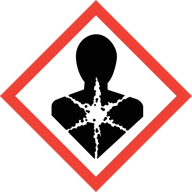
Health hazard
Can cause serious or long term health effects.
Covers: Carcinogen, mutagenicity, reproductive toxicity, respiratory sensitizer, target organ toxicity, aspiration toxicity.
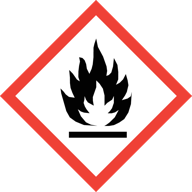
Flame
Can catch fire or burn easily.
Covers: Flammables, pyrophorics, self heating, emits flammable gas, self reactives, organic peroxides.
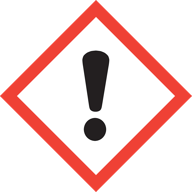
Exclamation mark
Less severe health effects.
Covers: Irritant (skin and eye), skin sensitizer, acute toxicity (harmful), narcotic effects, respiratory tract irritant.
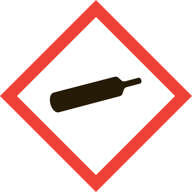
Gas cylinder
Gas under pressure. Can explode if heated or burst if damaged.
Covers: Gases under pressure.
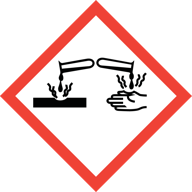
Corrosion
Burns skin, damages eyes, eats through metal.
Covers: Skin corrosion or burns, eye damage, corrosive to metals.
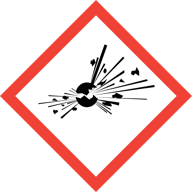
Exploding bomb
Can explode.
Covers: Explosives, self reactives, organic peroxides.
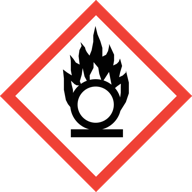
Flame over circle
Feeds a fire. Makes other materials burn harder.
Covers: Oxidizers.
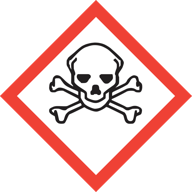
Skull and crossbones
Small amounts can kill or seriously harm you.
Covers: Acute toxicity (fatal or toxic).
Labels: what must be on them
Shipped container label
Put on by the manufacturer, importer or distributor.
- Product identifier
- Signal word: Danger or Warning
- Hazard statement(s)
- Pictogram(s)
- Precautionary statement(s)
- Name, address and phone number of the manufacturer, importer or responsible party
Workplace label
For containers at your workplace, such as a product poured into a spray bottle. Your employer can either:
- Use the same information as the shipped label, or
- Show the product identifier plus words, pictures or symbols that give the general hazards, along with the other information you get from training and the SDS
Safety Data Sheet (SDS) finder
Your employer must keep an SDS for every hazardous chemical at work and make it readily accessible to you during each work shift. Ask your supervisor where they are kept.
Where do I look when...
| You need to know about | Look in |
|---|---|
| Someone was exposed or hurt | Section 4, First aid measures |
| What protective equipment to wear | Section 8, Exposure controls and personal protection |
| A spill or leak | Section 6, Accidental release measures |
| A fire | Section 5, Fire fighting measures |
| How to store it and what to keep it away from | Sections 7 and 10 |
| How to get rid of it | Section 13, Disposal considerations |
| How it is shipped (UN number, class) | Section 14, Transport information |
| The supplier and emergency phone number | Section 1, Identification |
The 16 sections, in order
- Identification
- Hazard identification
- Composition and information on ingredients
- First aid measures
- Fire fighting measures
- Accidental release measures
- Handling and storage
- Exposure controls and personal protection
- Physical and chemical properties
- Stability and reactivity
- Toxicological information
- Ecological information
- Disposal considerations
- Transport information
- Regulatory information
- Other information
OSHA does not enforce sections 12 to 15, because other agencies regulate those topics, but the headings are part of the standard format. Section 16 shows the date the SDS was prepared or last revised.
Before you use a hazardous chemical
- Read the label. Know the pictograms and the signal word.
- Check SDS section 8 for the protective equipment you need, and put it on.
- Know where the eyewash, shower, spill kit and fire extinguisher are.
- Check SDS section 4 so you know the first aid before you need it.
- Store it the way section 7 says, away from anything section 10 says it reacts with.
- Poured some into another container? Label it.
- Not sure? Stop and ask your supervisor.
Who does what under HazCom
Your employer
- Keeps a written hazard communication program and a list of the hazardous chemicals at work
- Makes sure containers are labeled
- Keeps SDSs readily accessible
- Trains you when you start and whenever a new chemical hazard is brought into your work area
You
- Take part in training and follow it
- Use the protective equipment provided
- Report missing labels, damaged containers and hazards
Updated standard: key dates
OSHA published its updated Hazard Communication Standard on May 20, 2024. Employers must have workplace labels, the written program and training updated for chemical substances by November 20, 2026, and for mixtures by May 19, 2028.
Official rules and help
The law is in the official text. These are the sources we used and the places to check for changes.
These job aids summarize the rules to help you on the job. They do not replace the official text, your employer's procedures or the training your employer gives you for your site. Content last checked against the official sources on October 22, 2026.